


The Republic of Peru is a country located in western South America. It is bordered on the north by Colombia and Ecuador, on the east by Brazil, on the south by Chile, on the southwest by Bolivia, and on the west by the Pacific Ocean.
Peru was once home to the Norte Chico civilization, one of the oldest in the world, and to the Inca Empire, the largest state in Pre-Columbian America. The region was conquered by the Spanish Empire in the 16th century and they established a Viceroyalty, which included most of its South American colonies. Peru achieved independence in 1821, and since then has undergone political unrest as well as periods of stability and economic upswing. The earliest evidence of human presence in the country has been dated to approximately 9,000 years BC. In the 15th century, the Incas emerged as a powerful state. Andean societies were based on agriculture, with techniques such as irrigation and terracing being used. Husbandry of camelids and fishing were also important. Organization relied on reciprocity and redistribution because these societies had no notion of market or money. In 1532, a group of conquistadors led by Francisco Pizarro defeated and captured the Inca Emperor Atahualpa. In the early 19th century, with most of South America being swept by wars of independence, Peru remained a royalist stronghold. Peru became an independent state after the military campaigns of Jose de San Martin and Simon Bolivar. Peru experienced turmoil, drug trafficking and massive political violence for decades. Upon the presidency of Alberto Fujimori, the country started to recover but still there were accusations of authoritarianism, corruption, and human rights violations, which resulted in his resignation.
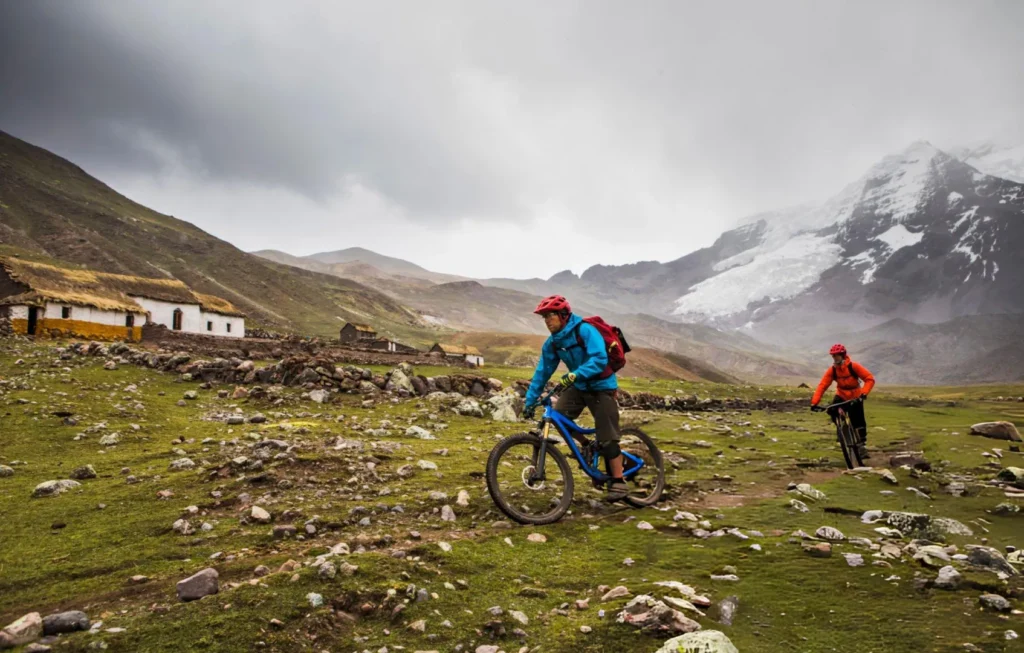
The Andes mountains run parallel to the Pacific ocean and divide the country into 3 geographic regions; The coast, the highlands, and the jungle. Peru unlike other equatorial countries does not have an exclusively tropical climate, the influence of the Andes causes great climatic diversity within the country. Because of its varied geography and climate, Peru has a high biodiversity with 21,462 species of plants and animals, about one-fourth exist nowhere else. The Peruvian government has established several protected areas for their preservation. The Incas maintain architectural achievements including the construction of Machu Picchu.
On February 19, 2021, the Government of Peru extended the COVID-19 health emergency protocol for another 180 days, from March 7 to September 2, 2021.
The Government of Peru also announced the extension of the current regional alert levels and movement restrictions to become effective April 19 to May 9, 2021. The Government of Peru indicates that it will reevaluate and adjust these public health measures every three weeks. Under these measures, all regions of Peru are categorized as High, Very High, or Extreme, with corresponding levels of restrictions. U.S. Citizens are advised to follow all Peruvian lockdown measures.
Currently, in Lima and other areas of “Extreme Alert”, curfew is at 9:00 p.m. As a result, businesses must close no later than 6:00 p.m. In areas of Peru in Moderate, High, or Very High alert, businesses must close no later than two hours before the local curfew.
For the latest updates on current public health measures, please refer to the information here.
Recommended immunizations for all travelers include Hepatitis A and B, Tetanus, and Typhoid fever. Protection from malaria is recommended if you are traveling to jungle regions and you should consult your physician about which malaria medication is best suited for you. Information on vaccinations and other health precautions, such as safe food and water precautions and insect bite protection, may be obtained from the CDC’s Internet site at http://www.cdc.gov/travel.