

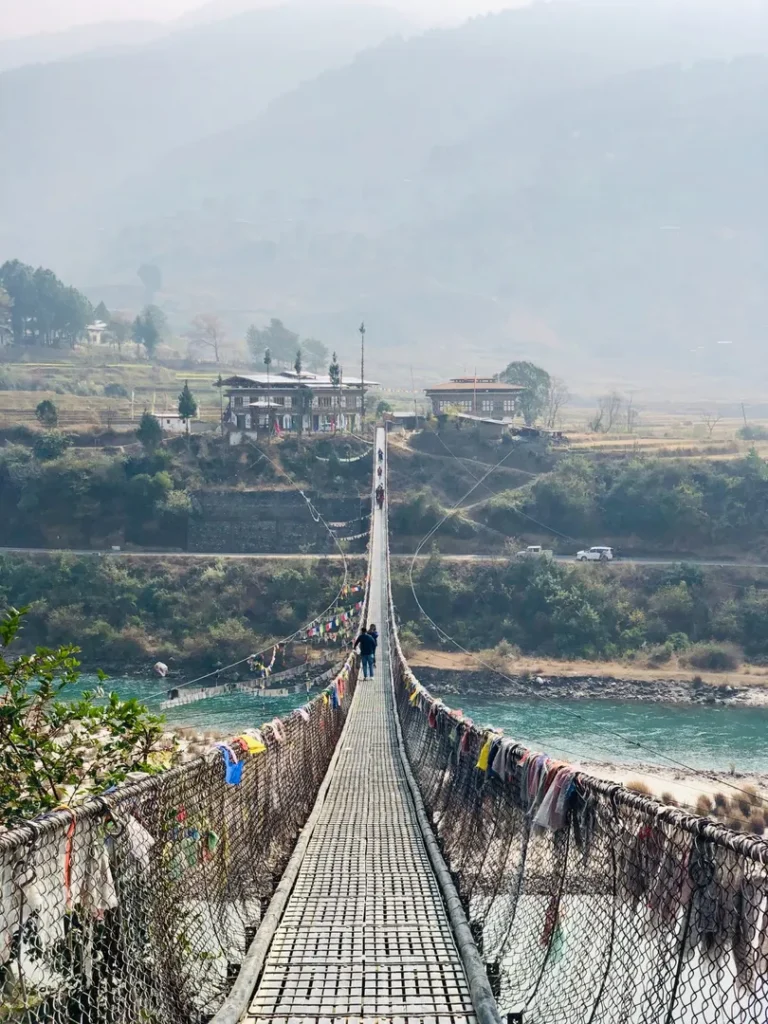
Bhutan, officially known as the Kingdom of Bhutan, is located at the eastern end of the Himalayas and bordered to the south, east and west by India and to the north by China.
Bhutan’s landscape ranges from subtropical plains in the south to sub-Alpine Himalayan heights in the north, with some peaks exceeding 7000m (23,000ft) in height. Stone tools, weapons, elephants, and remnants of large stone structures provide evidence that Bhutan was inhabited as early as 2000BC.
Bhutan existed as a patchwork of minor warring fiefdoms until the early 17th century, when the area was unified by the Shabdrung Ngawang Namgyal, who was guided by a prophecy, and fled religious persecution in Tibet and cultivated a separate Bhutanese identity. Namgyal built a network of impregnable dzong (fortresses) to defend against Tibet forays. These dzong still exist and are active centers of administration, religion, and tourism.
After Namgyal’s death, Bhutan fell into civil war and Tibet attacked again, the assault was thwarted and finally an armistice was signed in 1759. In the 18th century, Bhutanese invaded the kingdom of Cooch Behar, which led to the Duar War, which involved the British – border skirmishes would continue for 100 years. In 1907, Ugyen Wangchuck was unanimously chosen as the hereditary king of the country by an assembly of leading Buddhist monks after many years of civil wars and rebellions.
In the late 1980’s, the country expelled or forced to leave nearly a fifth of its population in the name of preserving its Tibetan Mahayana Buddhist culture and identity. In one of the world’s least known episodes, and what many scholars believe was an ‘ethnic cleansing’, the Nepali-origin Hindu Bhutanese fled their homeland. By 2008, 107,000 Bhutanese were living in seven camps in eastern Nepal.
Today, Bhutan is the only country to measure happiness (Gross National Happiness).
The Centers for Disease Control and Prevention (CDC) has issued a Level 1 Travel Health Notice for Bhutan due to COVID-19, indicating a low level of COVID-19 in the country. Visit the US Embassy’s COVID-19 page for more information on COVID-19 in Bhutan.
It is strongly advised to carry cash, an ATM card, traveler’s check, and a credit card that can be used for cash advances in case of emergency. The best places to exchange money are normally bureau de change, which are fast, have longer hours and often give slightly better rates than banks. Local currency is Ngultrum (BTN) equal to the Indian Rupee (INR), which is also accepted. Many hotels, lodges, and camps will accept credit cards, however it is advised to withdraw cash when visiting remote areas and villages.
It is estimated that between two thirds and three quarters of the Bhutanese population follow Vajrayana Buddhism, which is also the state religion. About one third are Hindus. Other religions account for less than 1% of the population.