

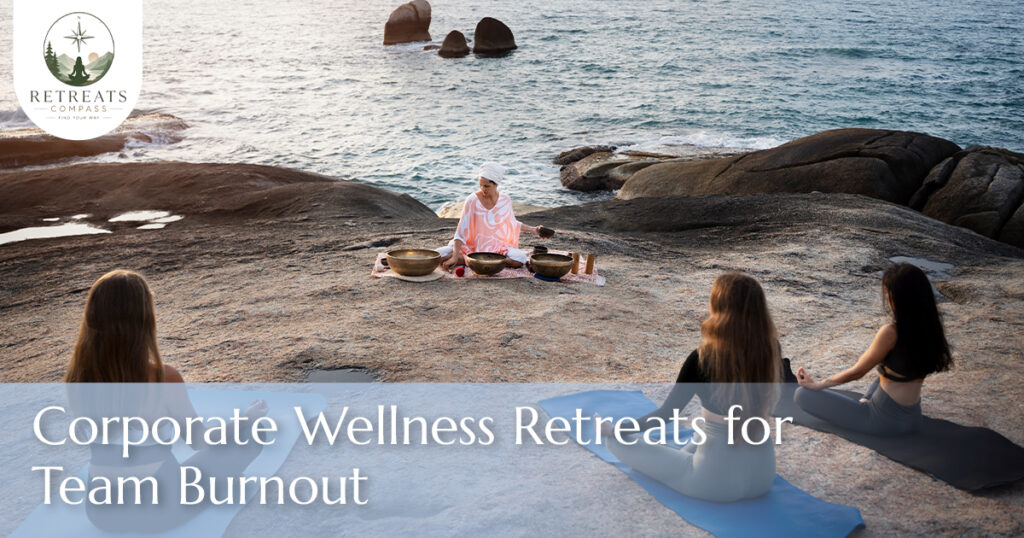
Burnout doesn’t announce itself. It creeps in through missed deadlines, shorter tempers, and a general sense that everyone on the people is running on fumes. Most companies respond with other team-building events, but a pizza party or an escape room doesn’t touch the main problem. What people need isn’t more stimulation. It’s room to recover.
That’s the gap corporate wellness retreats are designed to fill. Instead of packing a day with performance-driven activities, these retreats pull a team out of their normal environment and give them space to actually rest, reflect, and reconnect — with the goal of sending people back to work steadier than when they left.
Why Teams End Up Needing Something Like This
Burnout tends to look the same every place: people are tired, checked out, and getting less done even though they’re doing just as hard, if not harder. Part of the problem is that offices aren’t built for recovery. Notifications never stop, deadlines stack up, and there’s rarely a natural pause where someone’s nervous system gets to downshift.
This is where a wellness retreat differs from the usual team outing. A trust fall or a trivia night is still asking something of people—it’s still performance, just dressed up as fun. A retreat built around rest doesn’t ask anything. It gives employees permission to slow down, which is often the one thing they haven’t had in months.
What Actually Happens on One of These Retreats
A typical day might include a meditation session, some kind of movement—yoga, a hike, or a swim—and a workshop on managing stress, but it’s rarely wall-to-wall programming. Good retreats leave gaps on purpose so everyone don’t feel like they’re just trading one packed schedule for another.
Shared meals and open-ended group conversations tend to do more for team trust than any structured icebreaker could. People start talking about things that never come up at the office, and patterns emerge—who’s been quietly overwhelmed, who’s been picking up the slack, where communication has been breaking down. That kind of insight is hard to get anywhere else, and it gives leadership something concrete to act on once everyone’s back at their desks.
How This Actually Helps With Burnout
Unmanaged stress isn’t just uncomfortable — over time it’s linked to real health consequences, which is part of why the Government of Canada publishes guidance on workplace mental health and the toll chronic stress takes on employees. A retreat isn’t a cure, but it is a genuine intervention rather than a stopgap.
The difference between a retreat and a single day off comes down to depth. A day off lets you catch your breath. Several days away, paired with real skill-building—breathwork, boundary-setting, practical ways to say no — gives people tools they can actually use once they’re back in their normal routine. That’s what makes the effect last longer than the retreat itself.
Who Gets the Most Out of This
Leaders and managers are often carrying more stress than anyone realizes, and that stress has a way of trickling down to everyone reporting to them. When leadership takes a retreat seriously—actually resting instead of checking email from a lounge chair—it sends a signal about what’s acceptable, and that can shift a team’s culture more than any policy memo.
Some retreat centers feel this more than others. Healthcare show up near the top of burnout statistics, and the U.S. Bureau of Labor Statistics tracks how that stress translates into absenteeism and turnover. Companies in those fields tend to see the clearest payoff from investing in a retreat, especially once burnout has already started showing up in output, morale, or how many people are heading for the door.
What to Look for Before Book Retreat Leader
Not every retreat is built the same way. The ones worth paying for balance structure with genuine downtime—they’re not trying to cram value into every single hour. Fewer, better activities beat a packed itinerary every time.
It’s also worth confirming who’s actually running the sessions. A retreat led by a certified wellness coach is going to be safer and more effective for a group with a mix of fitness levels and experience. Before booking, ask about facilitator credentials, how large the team will be, and what kind of feedback past clients have seen. Those answers tell you a lot more than a glossy brochure will.
Conclusion
Burnout is easier to address before it costs you good people. A professional wellness retreat gives a team the rest, structure, and honest connection that daily office life rarely allows for and sends everyone back with more than just a tan. For companies serious about employee wellbeing long-term, it’s worth treating this as an investment rather than a perk—and working with an experienced wellness retreat management team can make the difference between a nice few days away and a program that actually moves the needle